
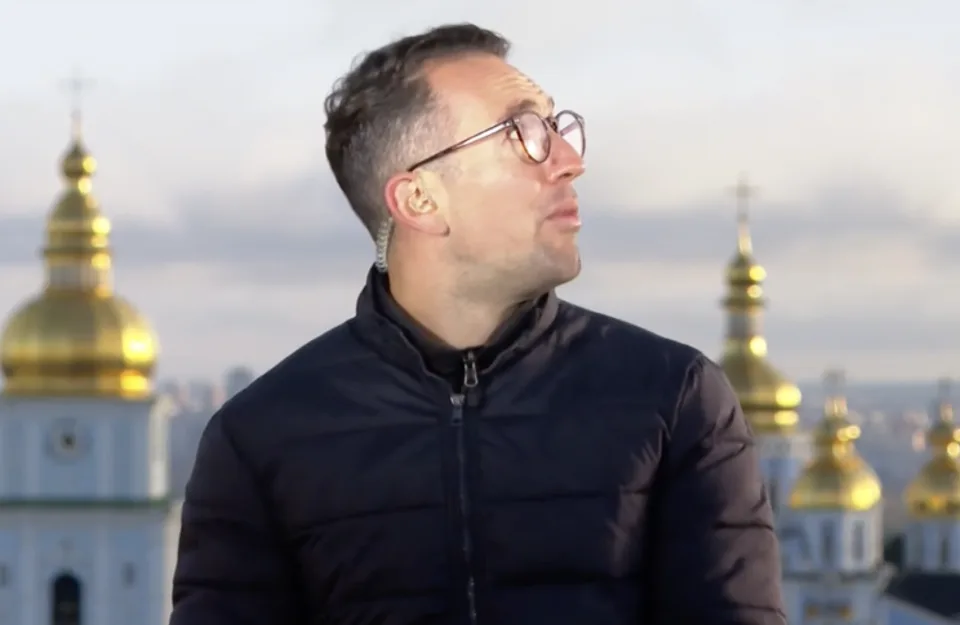
When Hugo Bachega Accent Explained watch international news coverage, they often pick up on more than just the story itself. The voice of the reporter becomes part of the experience. One journalist who frequently sparks this kind of attention is Hugo Bachega, whose accent has become a topic of curiosity among global audiences. People often search for explanations of how his accent developed, what influences shaped it, and why it sounds slightly different from standard British or other regional English accents.
This interest isn’t unusual. In global journalism, especially on platforms like BBC News, reporters come from diverse linguistic backgrounds. Their speech patterns often reflect a mix of cultures, education systems, and international work experiences. Hugo Bachega is a strong example of this modern, global journalist profile.
In this article, we’ll break down what people usually mean when they talk about his accent, why it stands out, and how such speech patterns naturally develop in international reporters.
Who is Hugo Bachega and Why His Accent Gets Attention?
Hugo Bachega Accent Explained is a well-known international correspondent who has reported from various global conflict zones and political hotspots. As part of BBC News, he regularly delivers on-the-ground reporting in high-pressure environments, where clarity and neutrality are key priorities.
One reason his accent attracts attention is because he works in a highly international space. Unlike studio presenters who may maintain a more standardized national accent, field reporters often develop a more blended way of speaking. Viewers from different countries sometimes find this blend hard to categorize, which naturally leads to curiosity and discussion.
Another important factor is visibility. When journalists appear frequently in breaking news coverage, audiences begin to recognize not just their reporting style but also their voice patterns. Over time, even subtle pronunciation differences become noticeable and can stand out more than they would in casual conversation.
Finally, the Hugo Bachega Accent Explained internet plays a big role. Clips of reporters are often shared independently of context, which amplifies small details like pronunciation or intonation. In Hugo Bachega’s case, this has contributed to ongoing online curiosity about his accent.
What Does Hugo Bachega’s Accent Sound Like?

When people talk about Hugo Bachega Accent Explained, they are usually referring to a clear but internationally influenced English pronunciation. It does not strongly match a single regional British accent, nor does it sound fully native to any one local dialect. Instead, it has a neutral, globally intelligible quality.
One noticeable feature is clarity. His speech is typically very carefully articulated, which is common among professional broadcast journalists. This clarity makes it easy for international audiences to understand him, especially during fast-moving news events where precision matters more than stylistic speech traits.
Another feature is rhythm. Some listeners describe his cadence as slightly “measured” or “balanced,” which often comes from years of broadcasting practice rather than natural regional speech. This type of rhythm helps ensure that important information is delivered clearly and without ambiguity.
Finally, there is a subtle blending effect. Certain vowel sounds or intonations may not align perfectly with traditional British regional accents. This is not unusual for journalists who have lived, studied, or worked in multiple countries, as their speech often adapts over time to suit international audiences.
Possible Influences Behind His Accent Development
The accent associated with Hugo Bachega Accent Explained shaped by a combination of personal background, education, and professional exposure. While exact linguistic histories can vary, there are a few common influences that typically affect journalists working in global news environments like BBC News.
First, multilingual or multicultural environments play a big role. Journalists who grow up or work across different language regions often develop speech patterns that are less tied to a single accent. This happens naturally as the brain adapts to multiple phonetic systems.
Second, professional training in broadcasting influences pronunciation. News organizations place strong emphasis on clarity, neutrality, and global comprehensibility. Over time, reporters may consciously or unconsciously adjust their speech to avoid strong regional markers that might distract international audiences.
Third, long-term exposure to English as an international working language can smooth out specific accent features. When someone spends years speaking English in diverse environments, their speech often becomes more neutral and less tied to a single Hugo Bachega Accent Explained . This is especially true in global journalism roles where communication with worldwide audiences is a daily requirement.
Why Journalists Often Develop Mixed or Neutral Accents
The phenomenon seen in Hugo Bachega Accent Explained is not unique. Many international journalists develop what could be described as “neutral” or “blended” accents over time. This is not intentional mimicry but rather a natural adaptation to professional demands.
One major reason is audience diversity. News organizations like BBC News broadcast to global audiences, not just local ones. A neutral accent ensures that information is easily understood in Asia, Africa, Europe, and the Americas without requiring listeners to interpret strong regional speech patterns.
Another reason is workplace environment. Journalists often work alongside colleagues from multiple countries. In such settings, speech naturally adjusts toward a middle ground that is comfortable for everyone involved. This is similar to how people unconsciously adapt their speaking style when talking to non-native speakers.
Lastly, repeated Hugo Bachega Accent ExplainedExplained to international reporting situations reinforces clarity over identity-based speech patterns. When delivering breaking news, the priority is not accent authenticity but speed, accuracy, and comprehension. Over time, this shapes a more standardized speaking style that can sound “accent-blended” to listeners.
Public Reactions and Online Discussions About His Accent
The accent of Hugo Bachega Accent Explained has become a small but recurring topic on social media platforms, especially during major news events. Viewers often comment on how “smooth,” “neutral,” or “international” his voice sounds, while others try to guess its origin.
In many cases, these discussions are light-hearted and curiosity-driven. People are simply intrigued by the way global journalists sound different from traditional local broadcasters. This reflects a broader interest in how language evolves in international media environments like BBC News.
However, online discussions can sometimes oversimplify accent analysis. Accents are complex and shaped by years of life experience, not just nationality or birthplace. Reducing them to a single label often misses the real linguistic story behind them. In Hugo Bachega’s case, his speech is best understood as professional, international broadcast English rather than belonging to one strict category.
Overall, the public reaction highlights how closely Hugo Bachega Accent Explained connect voice with identity. Even in serious news reporting, something as subtle as pronunciation can spark widespread curiosity and conversation.
Conclusion
The accent of Hugo Bachega Accent Explained is a great example of how modern journalism reflects global communication. Rather than fitting into a single regional category, his speech represents a blend shaped by professional broadcasting standards, international exposure, and the need for clarity across diverse audiences.
Within organizations like BBC News, this type of accent is increasingly common. It is not about losing identity, but about adapting communication for a Hugo Bachega Accent Explained audience that depends on clear and accessible reporting.